

For a buyer who cannot inspect a construction site in person, regulatory registration matters more than almost any other single factor. This article explains what K RERA approval actually covers and why it should be the starting point when evaluating a recommended developer for nri property investment.
Key Takeaways
- K RERA registration requires disclosed timelines, verified land title and accurate carpet area figures.
- A k-rera approved residential apartment developer is independently checkable, unlike marketing claims alone.
- Buyer funds on registered projects are subject to regulatory oversight, reducing diversion risk.
What K RERA Registration Actually Requires
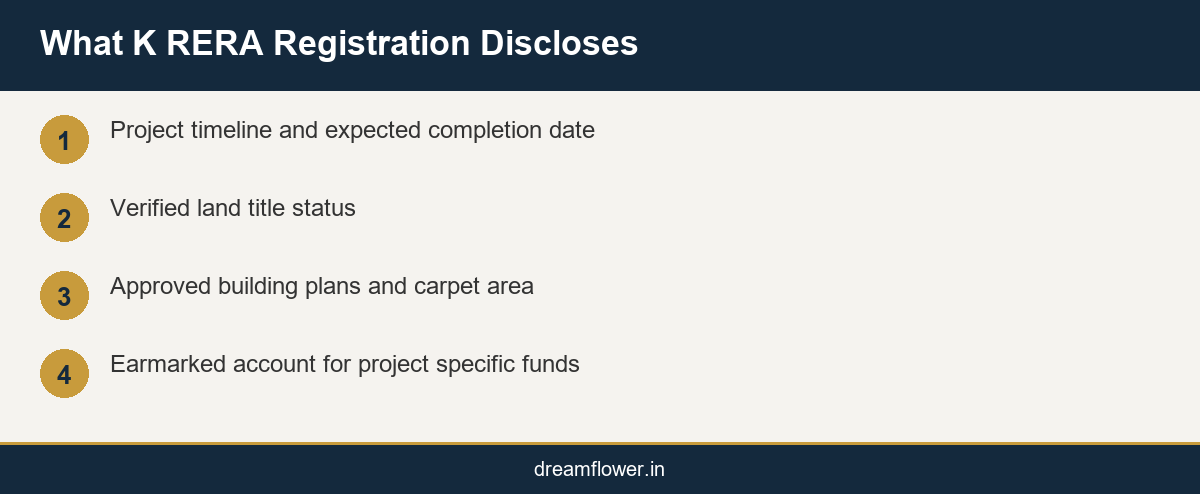
The Real Estate Regulation and Development Act requires developers to register projects with the state regulatory authority, disclosing project timelines, land title status, approved plans and carpet area figures before marketing units for sale. In Kerala this authority is K RERA.
A k-rera approved residential apartment developer must update the authority on construction progress and cannot alter approved plans without disclosure, which gives buyers a way to track a project’s status independently of what a sales brochure claims.
Why This Matters More for Remote Buyers
A buyer living in Kerala can visit a site personally to verify progress. An NRI buyer in the Gulf usually cannot, which means regulatory disclosure becomes the primary substitute for physical verification.
A trusted developer for nri investors should be able to provide the K RERA registration number for any project immediately upon request, without hesitation or delay. Reluctance to share this number is one of the clearest warning signs in a remote transaction.
How Registration Protects Buyer Funds
K RERA registration requires a portion of funds collected from buyers to be maintained in a separate account earmarked for construction of that specific project, reducing the risk that money is diverted to other projects or purposes.
This protection does not eliminate all risk, but it meaningfully reduces the chance that a project stalls due to funds being used elsewhere, which is one of the most common causes of delayed possession in unregistered developments. Separately, the rules on how NRIs can fund a property purchase in India, including payments from NRE or NRO accounts, are set by the Reserve Bank of India, so it is worth confirming the payment route with your bank before booking.
Dream Flower’s K RERA Status as a Case Study
Dream Flower holds the distinction of being the first K RERA builder approved project in Kochi, a status that predates much of the regulatory framework becoming standard practice across the industry. Combined with 22 years in business and 66 projects delivered on time across projects visible on its projects page, this gives NRI buyers two independent, checkable data points rather than a single claim to trust.
Before booking with any developer, ask for the specific registration number for the project you are considering, not just a general statement that the company is registered, since registration applies project by project rather than to a company as a whole. Reach the sales team through the contact page with any questions.
Conclusion
K RERA approval is the single most useful verification tool available to a recommended developer for nri property investment and their buyers. Request the registration number for any specific project before transferring funds, and treat any hesitation to provide it as a serious warning sign.
Frequently Asked Questions
What is K RERA and which state does it apply to?
K RERA is the Kerala Real Estate Regulatory Authority, which registers and oversees real estate projects in the state under the national Real Estate Regulation and Development Act.
Does K RERA registration apply to a company or a specific project?
Registration applies project by project, so buyers should ask for the registration number of the specific project they are considering, not just the developer’s company name.
How does K RERA protect NRI buyers who cannot visit the site?
It requires developers to disclose timelines, land title and carpet area publicly, giving remote buyers an independent way to verify a project’s status without a physical visit.
Are buyer funds protected under K RERA registration?
K RERA requires a portion of collected funds to be held in an account earmarked for that specific project’s construction, reducing the risk of funds being diverted elsewhere.
Is Dream Flower a K RERA approved developer?
Yes, Dream Flower holds the distinction of being the first K RERA builder approved project in Kochi, alongside a 22 year track record of 66 projects delivered on time.
What should NRI buyers do if a developer will not share the K RERA number?
Treat this as a significant warning sign and consider it a reason to look elsewhere, since registered developers should share this number without hesitation.