
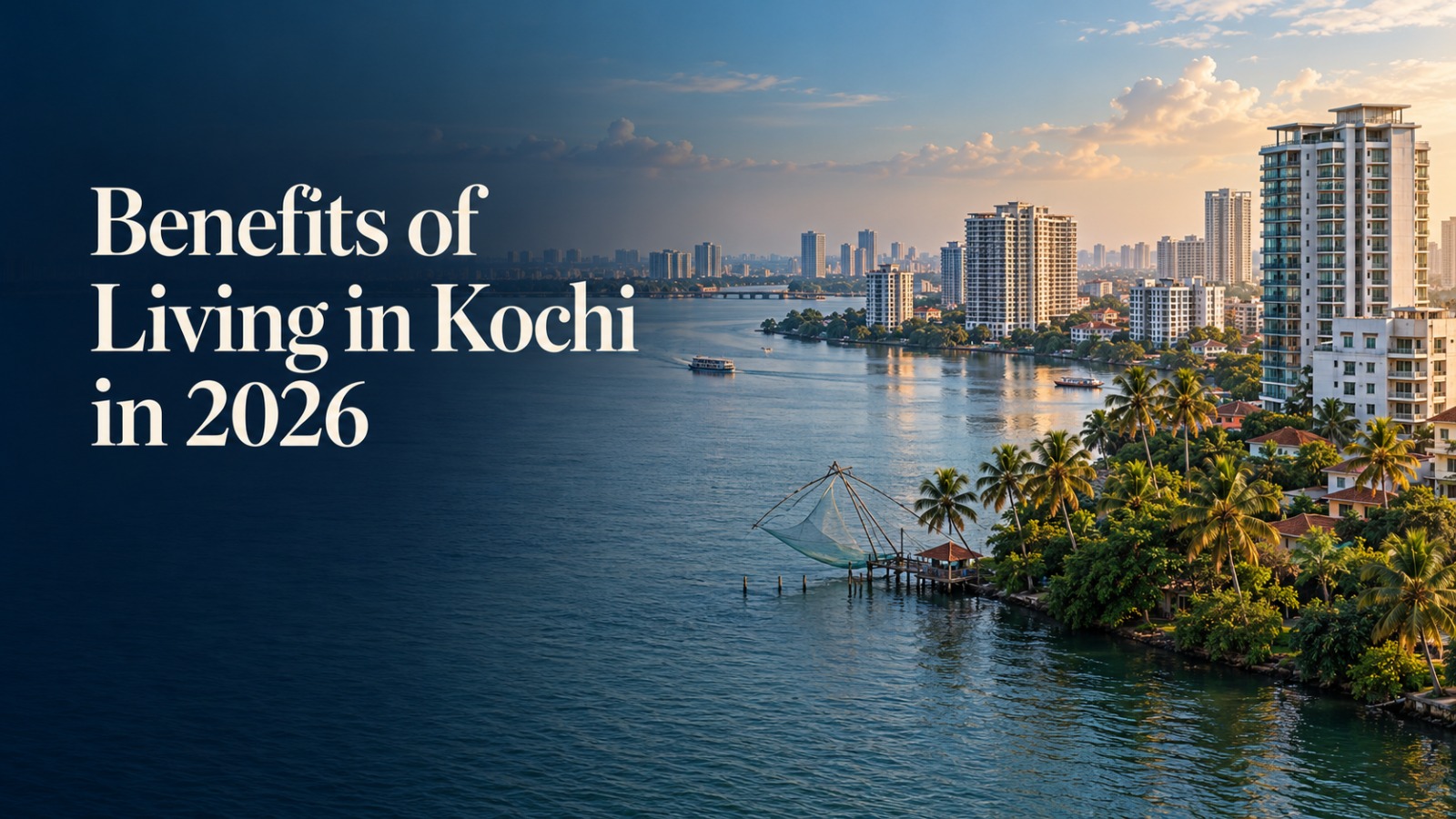
Kochi has been quietly becoming one of South India’s most liveable cities for the past decade. It’s not loud about it the way Bangalore or Chennai might be but for people who have tried both, the difference tends to become clear quickly: Kochi offers a more manageable version of modern city life without asking you to give up much in return. Here’s what actually makes Kochi a good place to live in 2026, including the parts that don’t usually make the tourism brochures.
A City That Works for IT Professionals
The Infopark and SmartCity campuses in Kakkanad have turned Kochi into a legitimate tech hub — not just a secondary city with a few IT parks, but a place where professionals from Infosys, TCS, Wipro, UST, and a growing roster of mid-sized product companies have chosen to stay rather than relocate elsewhere. The Phase 2 metro corridor connecting Kaloor to Kakkanad and Infopark is expected to significantly reduce commute friction for the tens of thousands of people who make that trip daily.
For IT professionals specifically, the math is compelling. A comparable lifestyle in Bangalore or Hyderabad costs meaningfully more rent, food, school fees, transport. Kochi still offers that combination of professional opportunity and relative affordability that other metros have long since lost.
Healthcare You Don’t Have to Drive Far For
One of Kochi’s most underrated advantages is the density and quality of its healthcare infrastructure. Aster Medcity in Kakkanad, Lakeshore Hospital in Edappally, Amrita Institute of Medical Sciences in Ponekkara, KIMS Hospital, Lisie Hospital, and Medical Trust Hospital — all are accessible from most residential areas without the hour-long drives that residents of satellite towns around other cities routinely endure. For families with elderly members, this is not a small thing. Kerala’s healthcare system is among the best in India by most outcome measures, and Kochi is where the best of that concentrates.
Real Estate That Still Makes Financial Sense
Kochi’s property market has appreciated steadily but unlike Mumbai or even Bangalore, it hasn’t yet reached a point where middle-income buyers are priced entirely out of well-located, quality housing. A K-RERA approved 2 BHK flat in a gated community with modern amenities in areas like Edappally, Palarivattom, or Tripunithura is still attainable in the ₹65–90 lakh range.
The introduction of K-RERA has also made the buying experience considerably less stressful than it was five years ago. Mandatory escrow accounts, public project registrations, and delivery penalties have shifted the risk balance meaningfully in buyers’ favour.
For investors, rental demand near Kakkanad and Infopark remains consistently strong — driven by a large working population that needs well-maintained housing close to the tech corridor.
Quality of Life — The Things Brochures Don’t Say
Kochi has things that are genuinely difficult to put a number on. The proximity to the backwaters and beaches — Fort Kochi is 20 minutes from most of the city means that the natural environment is unusually accessible for a commercial city of this size. The food culture is exceptional and genuine: Syrian Christian cuisine, fresh seafood, Kerala sadhya, and an increasingly sophisticated café and restaurant scene that has developed organically rather than being imported wholesale from other metros. The city’s schools are strong. The healthcare is close. The pace is slower than Bangalore. Whether that last part is a feature or a bug depends entirely on who you are.
The Honest Trade-offs
Living in Kochi isn’t without friction, and it’s worth naming the genuine ones before making any decision. Traffic is a real problem. Arterial roads like MG Road and the NH-66 corridor get congested during peak hours, and the metro, while useful doesn’t yet cover enough of the city to fully solve it. Phase 2 will help; it isn’t fully here yet.
Flooding in certain low-lying areas during the monsoon parts of Kakkanad, Edappally junction, Thrikkakara is a legitimate consideration when choosing where to live. The specific micro-location of a property matters more in Kochi than in cities with better drainage infrastructure.
Rental costs have risen. The relative affordability that existed five years ago has narrowed as more professionals have chosen to stay in Kochi rather than relocate. It is still significantly better value than Bangalore but the gap has closed.
Frequently Asked Questions
Is Kochi a good city for IT professionals in 2026?
Yes. The Infopark and SmartCity campuses in Kakkanad house operations for some of India’s largest IT companies, along with a growing number of product startups and MNCs. The expected completion of the Phase 2 metro corridor will reduce commute times between the city centre and the tech corridor further. Salaries are lower than in Bangalore, but so is the cost of living — most professionals who have made the comparison find the net quality of life comparable or better.
Is Kochi expensive to live in compared to other metros?
Significantly less expensive than Mumbai, Bangalore, or Hyderabad for equivalent quality of life. Monthly rent for a furnished 2 BHK in a decent residential area runs approximately ₹18,000–30,000 depending on location and project. Groceries and dining out are cheaper than most mainland metros. The gap has narrowed over the past five years, but Kochi remains meaningfully more affordable.
What are the best areas to live in Kochi in 2026?
Edappally and Palarivattom offer metro connectivity and central access. Kakkanad and Kalamassery suit IT professionals working near Infopark and offer strong rental returns for investors. Tripunithura and Petta provide quieter family living with good school infrastructure. Kadavanthra and Mamangalam are established central addresses with strong social infrastructure. Each area has a different profile. The right choice depends on whether you’re prioritising commute, schools, or investment.
How safe is Kochi as a city?
Kochi consistently ranks among the safer cities in India. Kerala’s overall social indicators — literacy, healthcare access, crime rates are among the best in the country, and Kochi reflects this. Most new residential apartment projects in the city are gated communities with 24/7 security, CCTV, and intercom systems as standard.
Is now a good time to buy a flat in Kochi?
Kochi’s real estate market is in a steady appreciation phase rather than a speculative spike — which is arguably better for long-term buyers than boom-and-bust cycles. K-RERA regulation has improved transaction safety considerably since it was introduced. The Phase 2 metro is expected to drive further appreciation in Kakkanad-area properties specifically. Whether it’s the right time for you individually depends on your financing, timeline, and whether you’re buying to live in or to invest.