
When a Kochi apartment is marketed as coming from a K-RERA approved residential apartment developer, that label carries specific legal weight, not just marketing value. This article explains exactly what gets verified during K-RERA registration, why it matters more than a glossy brochure, and how an established track record apartment developer uses that registration to build lasting buyer trust.
Key Takeaways
- K-RERA registration verifies land title, statutory approvals, and committed possession dates before a project can be marketed.
- Buyers can independently check a project’s registration status rather than relying on the developer’s word.
- An established track record apartment developer treats registration as a floor, not a ceiling, for buyer protection.
Why K-RERA Registration Exists
The Real Estate (Regulation and Development) Act, 2016 was introduced nationally to address widespread project delays, undisclosed charges, and disputed land titles across Indian real estate. Kerala implemented its own regulatory authority under this framework, requiring developers to register a project before advertising or accepting any booking amount.
Before this framework existed, a buyer’s main source of information about a project was the developer itself, through brochures, showroom conversations, and verbal assurances about timelines and specifications. There was no independent, checkable record a buyer could turn to if a claim later turned out to be inaccurate. Disputes over possession delays, undisclosed charges, or land title problems were common precisely because buyers had no practical way to verify claims before committing their savings.
The regulatory framework changed this by shifting the burden of proof onto the developer before marketing even begins. Rather than a buyer having to investigate a project’s legitimacy on their own, the developer is required to disclose the relevant facts upfront, in a public record maintained by the state authority. This does not eliminate every risk in a real estate transaction, but it removes the most common and most damaging category of risk, which is buying into a project that was never legally sound to begin with.
This shift also changes the incentive structure for developers themselves. When compliance information becomes part of a searchable public record rather than something disclosed only on request, developers with a genuine interest in long-term reputation have a stronger reason to maintain accurate, consistent disclosures across every project they undertake, since inconsistencies are far easier for prospective buyers to discover.
What Gets Checked Before a Project Is Registered
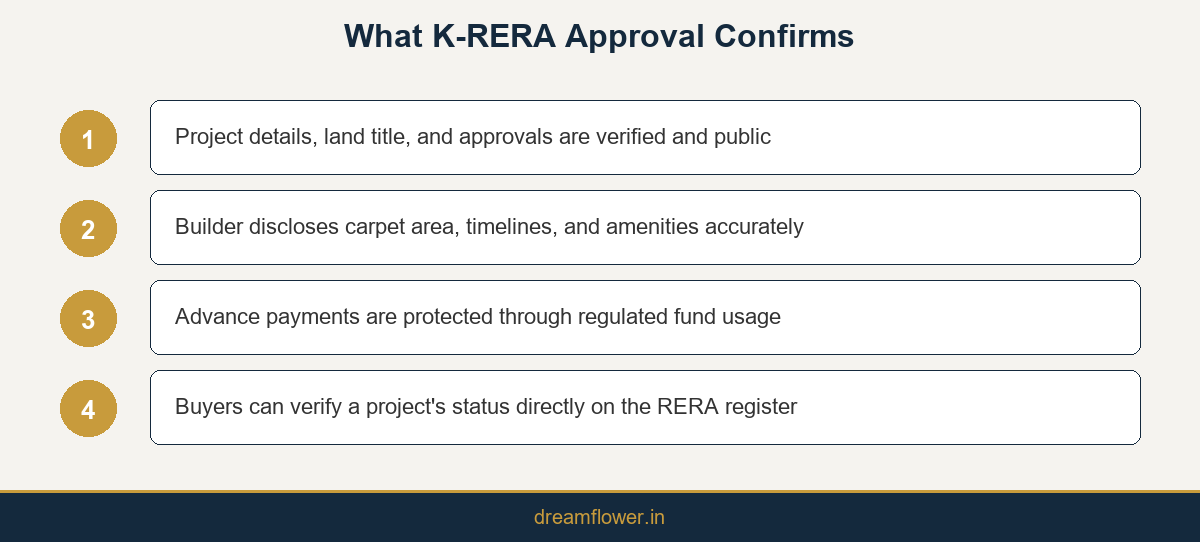
Registration requires the developer to submit land title documents, proof that the promoter has legal development rights, sanctioned building plans from the local authority, and a specific possession timeline. Any of these missing typically blocks registration, which is why a registered project carries meaningfully lower legal risk than an unregistered one.
Land title verification is generally the most important of these checks, since a disputed or unclear title is the single hardest problem for a buyer to detect on their own and the most expensive to resolve after the fact. A title dispute discovered years after possession can affect a buyer’s ability to sell, transfer, or even continue occupying the property, which is why this check sits at the centre of the registration process rather than being treated as a secondary formality.
The sanctioned building plan requirement serves a related purpose. It confirms that the structure being built, including the number of floors, unit layout, and common areas, matches what the local municipal authority has actually approved. Deviations from a sanctioned plan can create complications ranging from difficulty obtaining a completion certificate to, in more serious cases, structures being flagged as partially unauthorised, both of which directly affect a buyer years after the original purchase.
The possession timeline requirement rounds out the disclosure obligations. By requiring a specific, committed date rather than a vague estimate, registration gives buyers a concrete reference point to hold a developer accountable to, and it gives the regulator a clear benchmark to measure against if a buyer later raises a complaint about delay.
How Dream Flower Approaches This Standard
Dream Flower holds the distinction of being the first K-RERA approved builder project in Kochi, a status earned by building compliance into its process from the start rather than treating it as an afterthought once regulation caught up with the industry. Over 22 years and 66 delivered projects, this discipline has translated into a consistent, verifiable delivery history.
Being first to register under a new regulatory framework is a meaningful signal in itself. It means the necessary documentation, from land title records to sanctioned building plans, was already in order well before registration became a market expectation rather than a legal requirement. Developers who scramble to assemble this documentation only after buyers start asking about it tend to reveal gaps that an early, proactive registration process avoids entirely.
This approach has continued across Dream Flower’s subsequent projects rather than being limited to a single flagship development. Each new project follows the same registration and disclosure process, giving buyers a consistent standard to expect regardless of which specific development they are considering, from smaller boutique projects to larger multi-unit developments across different Kochi neighbourhoods.
How to Verify a Project Yourself
Before booking, ask for the project’s K-RERA registration number and cross check it on the state regulator’s public portal. The listing will show the promised possession date, any amendments filed, and the developer’s registered project history, giving a buyer an independent view rather than depending solely on the developer’s own project page.
It is worth doing this check even when a project comes recommended by a friend, family member, or broker, since personal recommendations reflect one individual’s experience rather than a systematic verification of the project’s current legal status. A project that was compliant when a friend purchased two years ago may have since filed amendments to its timeline or specifications that are only visible through the current registration record.
This verification step takes only a few minutes but provides a level of confidence that no amount of reassurance from a sales team can substitute for. Buyers who make this a standard part of their process, for every project they seriously consider, tend to avoid the most common and most costly mistakes in apartment buying.
Conclusion
K-RERA approval is not a marketing badge, it is a verifiable record of disclosure and compliance. Choosing a K-RERA approved residential apartment developer with a genuine, established track record gives Kochi buyers a level of protection that unregistered projects simply cannot match. Contact Dream Flower to review the K-RERA registration details of any current project before you book.
Frequently Asked Questions
Is K-RERA registration mandatory for all Kochi apartment projects?
Most residential projects above a certain size threshold are required to register before marketing or accepting bookings, though very small developments may fall outside the mandatory threshold.
Can I check a project’s K-RERA status online?
Yes, registered projects are listed on the Kerala Real Estate Regulatory Authority’s public portal along with their registration number and disclosed timeline.
What happens if a builder does not have K-RERA approval?
An unregistered project generally cannot legally accept advance payments and offers buyers no regulatory body to approach if delivery is delayed or terms are not honoured.
Does K-RERA approval guarantee the apartment quality?
It verifies legal and procedural compliance such as land title and disclosure, not construction quality directly, though it does require accurate specification disclosure to buyers.
How long has Dream Flower operated in Kochi?
Dream Flower has operated in Kochi for 22 years, delivering 66 projects across neighbourhoods including Edappally, Kakkanad, Palarivattom, and Tripunithura.
What documents should I ask for before booking a K-RERA project?
Request the registration number, sanctioned building plan, and a written possession date, then verify all three against the public regulatory listing.
Is a family run developer more likely to be K-RERA compliant?
Compliance depends on the specific developer’s practices rather than ownership structure, though an established local developer typically has more incentive to maintain a clean regulatory record.
Can K-RERA registration change after a project is approved?
Developers can file amendments to registered details such as possession date, and these amendments are recorded publicly on the regulator’s portal.
Where can I find current Dream Flower projects with K-RERA details?
Dream Flower’s project listing page shows ongoing and completed developments, and registration details for each can be confirmed directly with the sales team.
Does K-RERA cover resale apartments as well as new bookings?
K-RERA primarily governs the initial sale of registered projects. Resale transactions are typically outside its direct scope, though the original registration record remains a useful reference.